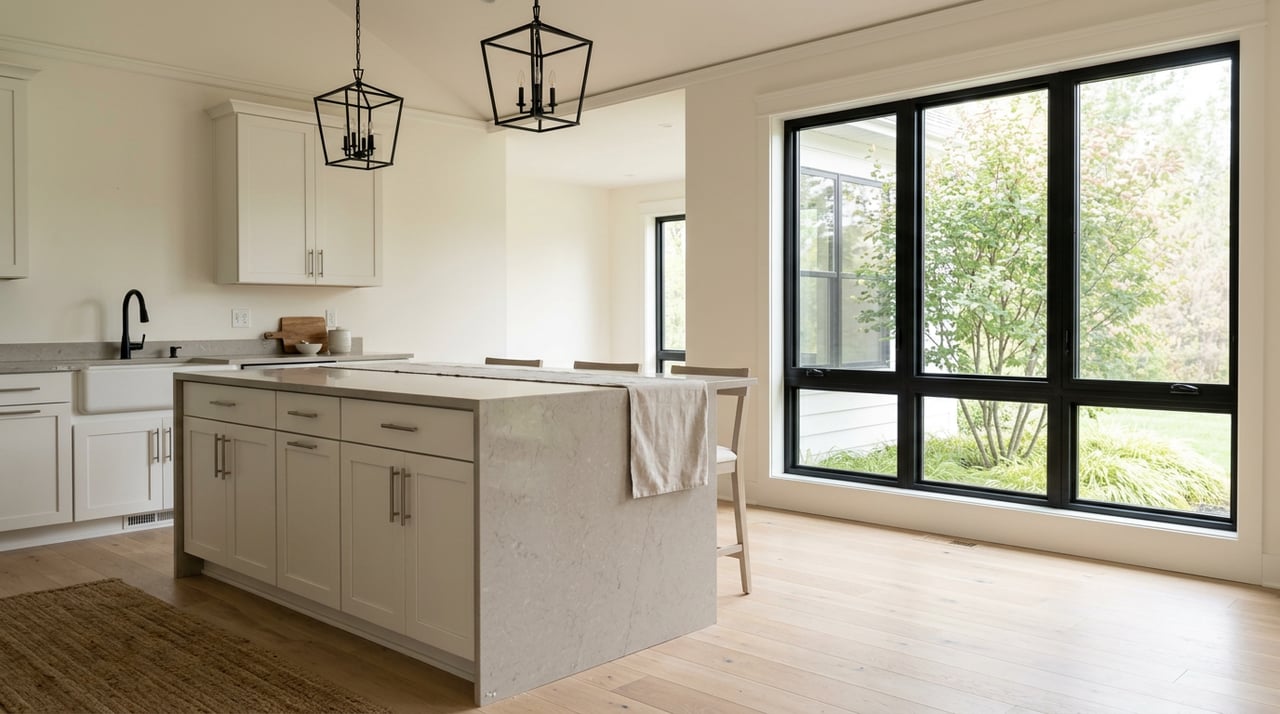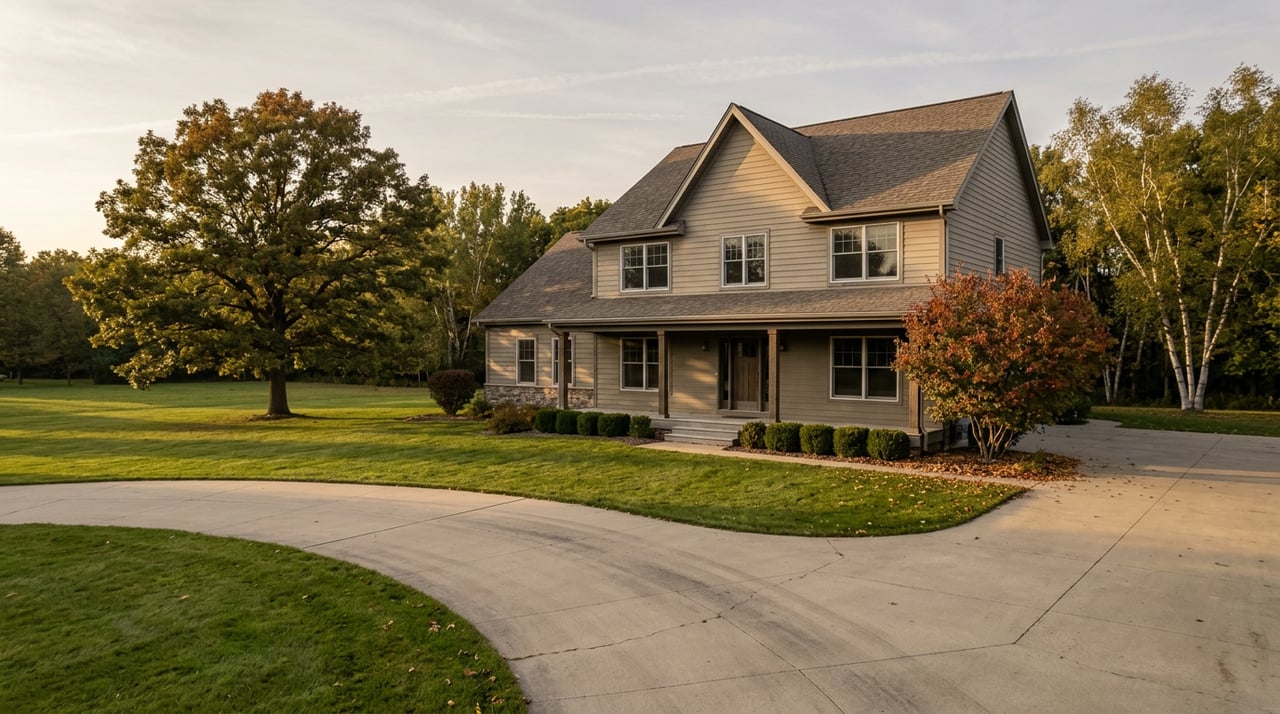
Two listings turned up in Chatfield this year that had almost nothing in common except the town's name. One was the George H. Haven House, a brick residence on the historic registry within walking distance of downtown, the Chatfield Center for the Arts, and the aquatic center. The other was Redtail Ridge, a 48-plus acre executive estate reached by a gated, lighted driveway, built for privacy rather than proximity to anything.
Both are "Chatfield real estate." Neither tells you what the other one costs, and averaging them together tells you even less. That's the problem for anyone trying to read Chatfield's home price data from outside town: the number you find depends entirely on which Chatfield it's counting.
Two Products, One Zip Code
Chatfield's housing stock splits along a fairly clean line. On one side sits the town's original core: Victorian-era homes, postwar ranches, and split-levels clustered around Main Street, many of them decades old and modest in footprint. On the other side is a newer, larger-format segment built on the edges of town, in subdivisions like the Lone Stone development, in custom builds like the one recently completed at 424 Amco Ln near the school, and in multi-acre country properties that never touch a city sidewalk.
The size gap between these two segments shows up in the data. Real estate portals tracking Chatfield in 2026 put the average home size in town at roughly 3,090 square feet, well above the surrounding county average of about 2,357 square feet. That's not because every house in Chatfield is unusually large. It's because the new-construction and acreage segment is large enough, and visible enough in current listings, to pull the average well above what a typical in-town home actually measures.
| In-town Chatfield | Edge-of-town Chatfield | |
|---|---|---|
| Typical vintage | Late 1800s to 1970s | 2000s to new construction |
| Typical size | Under 2,000 sq ft | 3,000 to 7,000+ sq ft |
| Recent example | Haven House, downtown cottage renovations | Lone Stone development, 424 Amco Ln, Redtail Ridge |
| Setting | Walkable to Main Street | Acreage or subdivision lot on the edge of town |
What The Median Actually Tracks
This is why the headline numbers look inconsistent depending on when you catch them. Trailing twelve-month figures through mid-2026 put Chatfield's median sold price somewhere between $262,000 and $268,000, down in the low single digits from the year before. At the same time, active listings on those same portals carried median asking prices anywhere from $290,000 to $355,000, and the average sale price across recent closings ran closer to $304,000.
That's not one market disagreeing with itself. It's the sold column tracking mostly in-town turnover while the asking column gets weighted by whatever new-build and acreage inventory happens to be sitting active at that moment. With only around 42 to 44 homes closing in Chatfield over a twelve-month stretch, it doesn't take many high-end listings entering or leaving the active pool to swing the asking-price side of the ledger without moving the sold side at all.
If you're comparing a $355,000 asking price to a $265,000 median sold price and wondering which one describes the town, the honest answer is neither. They're describing different slices of the same small market.
The Segment That Sits Longer
Days on market tells a similar story. Some portal snapshots put Chatfield's average time to sale around 60 to 69 days, close to typical for a small Minnesota town. Others, tracking a different mix of active listings in early 2026, showed a median closer to 145 days for homes currently on the market, a figure the same source flagged as a market slowdown.
Both can be true at once if you separate the segments. Smaller, well-priced in-town homes tend to move at a pace close to that 60-day figure. Larger new construction and acreage properties, priced well above what most local buyers are shopping for, can sit for months waiting for the right buyer to find them. A 48-acre estate or a custom build near the new school isn't competing with the same buyer pool as a two-bedroom cottage near Main Street, and it doesn't sell on the same timeline either.
Why Chatfield Fits Into The Rochester-Fringe Conversation
Part of what's driving the edge-of-town segment is geography. Chatfield sits roughly 20 miles south of Rochester by way of US-52 and Minnesota Highway 30, close enough for a daily commute but far enough to trade apartment towers for acreage. As Rochester's own construction boom has leaned heavily toward multifamily housing for Mayo Clinic's workforce, buyers looking for a single-family lot with room to spread out have been pushed toward towns like Chatfield, Byron, and Stewartville instead.
That overflow demand is a reasonable explanation for why so much of Chatfield's new construction skews larger and pricier than the town's historical housing stock. It's not that Chatfield suddenly became an expensive place to live. It's that a portion of its new inventory is being built for buyers whose reference point is Rochester pricing, not Chatfield's Main Street.
Why New Construction Lands On The Edges
Chatfield's own development strategy reinforces the split. The city currently markets commercial lots along Enterprise Drive SE, zoned for light industrial and trade use, along with roughly 60 acres near County Road 10 and 155th Ave NE that its Economic Development Authority is actively trying to bring into development. Utilities are already stubbed to several of these sites, and the city has offered a construction rebate tied to the taxable value of whatever gets built there. Growth, in other words, is being directed outward and upward, toward larger commercial and residential product on undeveloped land, not backfilled into downtown's existing lots.
That outward push hasn't come without local friction. In February 2025, Chatfield voters rejected an $11 million school facilities bond that would have funded a new competition-sized gym, with the measure failing by a wide margin. The vote is a reminder that residents don't automatically say yes to growth-driven spending just because private development on the edges of town keeps moving forward. Public investment and private construction are following two different timelines here too, which is worth keeping in mind if you're trying to read Chatfield's trajectory from price data alone.
What This Means If You're Comparing Towns
If you're shopping Chatfield against other Rochester-fringe options, a few habits will save you from comparing apples to acreage:
- Ask what segment a comp actually belongs to before treating it as representative. A $355,000 asking price near Lone Stone and a $235,000 in-town ranch aren't proof the market moved, they're proof you're looking at two different products.
- Weight price-per-square-foot conversations by vintage and location, not just by town name. A price-per-square-foot figure that blends a 1900s cottage with a 2026 custom build won't tell you much about either one.
- Watch days on market by segment, not townwide. A property that's been active for four months isn't necessarily overpriced for Chatfield. It may just be priced for a buyer pool that's smaller and pickier than the one shopping in-town homes.
- Treat the current median sold price, in the $260,000s as of mid-2026, as a floor reflecting the older housing stock, not a ceiling on what's available.
FAQ
Is Chatfield's housing market slowing down? The picture depends on the segment. Median sold prices ticked down slightly year over year through mid-2026, and some active new-construction and acreage listings have taken longer to sell. That's consistent with a market where in-town turnover stays steady while the higher end absorbs more slowly.
Why does Chatfield have so many large new homes for a town its size? A combination of city-led development on the edges of town, available acreage, and overflow demand from Rochester's tight single-family inventory has pushed a share of new construction toward larger, higher-end product than the town's historical housing stock.
If you're weighing Chatfield against other towns near Rochester, or trying to figure out what a specific price actually buys once you know which side of town it's on, that's exactly the kind of comparison worth talking through before you start touring. John Nelson works this corner of southeast Minnesota daily and can walk you through current inventory on both sides of Chatfield's market. Schedule your free market consultation to get a clearer read before you make an offer.